Asia Undercovered Round-up: 23 November 2026


What happens after something has been documented? The International Court of Justice found a state responsible for genocide for the first time. Researchers reconstructed a Himalayan disaster minute by minute from seismic traces and villagers' memories. Thai monitors measured arsenic in the Mekong, then measured it again. The Kathmandu Post read 265 posts by a prime minister who will not take questions. Each of these is careful, hard-won work. Yet in almost every case, the people being described are still waiting: Rohingya families in Cox's Bazar, flood survivors in Nepal holding a USD 20 million promise with no date attached.
Documenting something is not the same as being heard, but being heard starts there. The verdict in The Hague will mean something only if someone carries it into Rakhine, where the Arakan Army, not the generals, now holds the land. The arsenic readings will matter only if Bangkok and Vientiane act on them. This issue is about that gap between knowing and acting, and about the people, reporters among them, who keep working in it.
Laos Is Paying for Its Boom, Twice
Laos has close to a hundred hydropower dams and aims to become the "battery of Southeast Asia," yet household bills have doubled for some families. As Konlaphat Siri reports for HaRDstories (in Thai), a lower-secondary teacher in Sekong province saw his bill climb past 100,000 kip a month for power on a salary of 1.7 million kip. He and his wife light a wood fire in the evenings to save on lighting. In Houaphanh, a meter reader for the state utility describes a family of five with a single bulb, who pay the rising bill with money from selling eggs. Électricité du Laos (EDL) raised tariffs by an average of 12% in 2025 and 21% this year, and plans increases of at least 2% a year through 2029.
The reason is debt. Laos needs only about 2,000 MW at home, so some of the capacity it built goes unused. The transmission lines were financed with loans from China Exim Bank and China Development Bank, and China Southern Power Grid now owns the national transmission company outright. Nam Ou Power, a PowerChina subsidiary, has billed EDL for USD 555 million in arrears. In the dry season, Laos buys power back from Thailand for more than it charges Thailand, a campaigner from Rivers and Rights told the outlet. A Lowy Institute report put the cost of power imports from Thailand at USD 240 million in 2023.
The mines are the second bill, and it is landing downstream. Writing in the Bangkok Post, Brian Eyler of the Stimson Center and Madelyn MacMurray of the University of Wisconsin-Madison count 261 mines along twelve Lao tributaries that flow straight to the Thai border. Satellite images show few or no tailings ponds at these sites. Laos suspended new mining approvals in 2024, but the number of unregulated mines still rose by nearly 60 percent in 2025. Thai monitors found arsenic above the standard in water and sediment at most testing points from Loei to Nakhon Phanom in August, and levels were still above the standard in all four provinces when they checked again in September. Earlier this month the Laotian Times reported a spill at a Chinese-owned rare earth mine in Houaphanh, the mine's second major accident in under three years. The authors argue that Vientiane, a closer partner to Bangkok than Myanmar's government, is where Thailand can actually make progress.
Meanwhile, Gerald Flynn reports for Mongabay that the wildlife trade regulator CITES lifted its 2023 sanctions on Laos on November 4. That opens the way for exports of long-tailed macaques for biomedical research, once safeguards are in place. Conservationists dispute a 2024 university estimate of more than 30,000, and the Environmental Investigation Agency says it is too early to tell whether the crackdown on wildlife trafficking is "performative" or real.
The Rohingya Won in Court. Now Comes the Hard Part.
On November 19, the International Court of Justice ruled that Myanmar committed genocide against the Rohingya during the military's 2016-2017 operations in Rakhine State. It is the first time in the court's history that it has found a state responsible for genocide, and it ordered compensation and measures for safe return. Writing for Religion News Service, Omar Suleiman credits the survivors who kept the evidence, and The Gambia, which brought the case in 2019 with the backing of the Organisation of Islamic Cooperation when far richer governments would not. He also points out that refugees in Bangladesh still face restrictions on work and movement, and that funding cuts are putting their children's schooling at risk. The ruling will matter only if compensation and return actually reach the camps in Cox's Bazar.
Naypyitaw has already given its answer. As Nyein Chan Aye writes in Asia Times, the judges split nine to six, and the government of President Min Aung Hlaing, who commanded the army in 2017, called the verdict unfair on the strength of the dissents. Its foreign ministry still referred to the Rohingya as "Bengalis." Nyein Chan Aye argues that the question now is who can carry out the court's orders on the ground. The ruling binds Myanmar as a state, but the Arakan Army now holds 14 of Rakhine's 17 townships, including Maungdaw and Buthidaung, and controls the border with Bangladesh.
Its leader, Twan Mrat Naing, has said several times since 2022 that he supports the refugees' return, most recently in May this year. Its administration has brought Muslim residents into local posts, and a historic mosque in Maungdaw has reopened. However, the UN Human Rights Office has reported arbitrary detention, forced recruitment, sexual violence and property seizures against Rohingya in areas the AA controls. The group denies the allegations, and it still mostly calls the community "Muslims" rather than Rohingya. Bangladesh, which is in contact with both Naypyitaw and the AA, told Reuters it hopes to open a path to return within 12 to 18 months. The UN says conditions are not yet in place. Nyein Chan Aye argues that the AA's claim to govern should be judged first by how it treats the Rohingya who never left.
Nepal's Floods, and the Bill Nobody Pays
Nepal has now been hit by two Himalayan disasters in two months. A Stimson Center assessment by Kristen Cook, Manish Raj Gouli, Biraj Pokharel and colleagues of the October 11 disaster in the Budhi Gandaki basin found that a rock avalanche on Mount Chamar set off debris flows lasting more than two hours, which swept away about 121 homes. The most destructive wave came when a landslide dam broke just before 6 a.m. Six people are still missing, and the toll was low partly because residents had seen footage of August's Bhotekoshi-Trishuli disaster. They ran to higher ground and phoned relatives downstream, often before any government alert arrived.
The August floods killed more than 1,400 people, and the recovery bill is USD 4.7 billion. As the Kathmandu Post reports, the UN's loss and damage fund has approved USD 20 million for the affected areas. That is the fund's first allocation for a specific disaster, but the money has no disbursement date and Nepal has not yet submitted a proposal. At COP31 in Antalya, the mountain agenda Nepal pushed with Bhutan did not survive the negotiations. The Post also points to problems at home: Nepal typically spends only about 60 percent of its own development budget, and the Miteri bridge, rebuilt in January, was washed away again in August.
Nepal's Prime Minister Posts, but Doesn't Answer
When Balendra Shah was mayor of Kathmandu, he used Facebook to attack those in power. As prime minister, he uses it to reassure his followers. The Kathmandu Post coded 265 of his posts. As mayor, he attacked people by name 39 times. Since taking office in March, he has done it once. The morning after police entered newsrooms and detained journalists, he posted about mobile games. He has not given interviews or held press conferences since taking office, the Post notes, and his office did not reply to the Post's questions.
Cambodia Drafts Its Young, While Its Scam Industry Spreads Abroad
Cambodia has begun conscription for the first time. Nikkei Asia reports, with contributing writer Phoung Vantha, that 14,646 people applied for the first 10,000 places, some citing last year's deadly border war with Thailand. For the first intake, the government sought volunteers, with a lottery only if too few applied.
The scam industry, meanwhile, has relocated rather than closed. As Lam Le reports for Tech Policy Press, Telegram channels were still recruiting for scam jobs in Cambodia two months after the government declared that no compounds remained. Operations have moved to Vietnam, Sri Lanka, Timor-Leste and farther afield, often run by the same bosses, who now recruit from the workers left stranded by the crackdown. A Vietnamese investigator estimates that a 15-person operation can be set up for under USD 4,000.
Rights Under Pressure
In Cambodia, the Francophonie Summit came and went in Phnom Penh on November 15-16, and five Mother Nature Cambodia activists were still waiting for an appeal hearing as of the summit. Cambodianess reports that a hearing set for June was called off 48 hours beforehand. The government maintains the case is a matter for the courts.
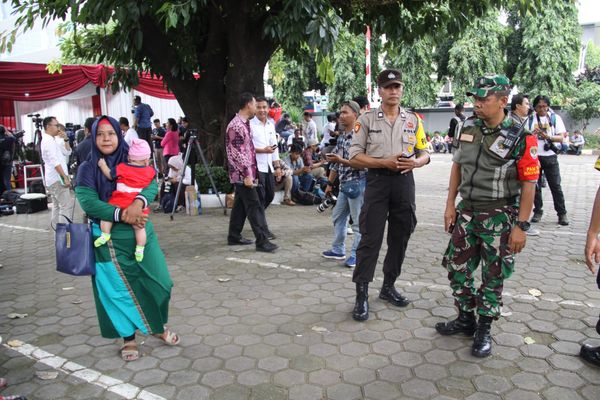
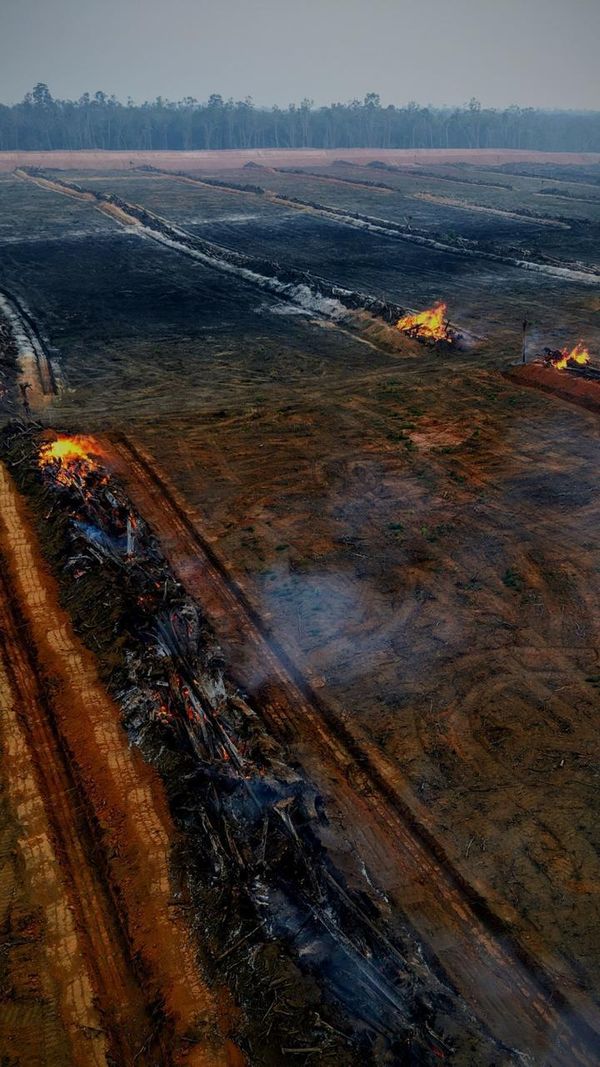
In Indonesia, police officers have been entering churches, sometimes during the service, under a new program called Minggu Kasih. As Raja Eben Lumbanrau reports for BBC News Indonesia (in Indonesian), the visits coincided with pastors raising three fingers from the pulpit to criticize the handling of forest fires and the clearing of forest in Papua. The rights group Imparsial warns that the visits could amount to intimidation.
In Assam's Lakhimpur district, authorities demolished the homes of 132 Bengali Muslim families who, according to local leaders, had been resettled there by the state after the 1983 riots. Rokibuz Zaman reports for Scroll that residents say the homes of their Hindu neighbors were left standing. More than 1,900 Muslim families have been evicted across the state in the past month.
In Manipur, Meitei and Naga groups, long at odds with each other, marched together on October 31 to demand an end to the ceasefire with Kuki armed groups. Rokibuz Zaman, for Scroll, reports that Naga leaders call the alliance temporary. A former Union home secretary warns that scrapping the ceasefire will not stop the violence while civilians remain armed.
In Bangladesh, Del H. Khan, a retired army major writing in Counterpoint, argues that no political camp owns the memory of November 7, 1975, and that the army must never again become a battleground for politics.
Asia Undercovered offers biweekly round-ups and analysis of Asian news, curated by journalist Seulki Lee, founder and editor-in-chief of Dunia, an Asian investigative network. If you found this round-up useful, please consider donating to support the next one.
Thank you for your support and see you in two weeks!