Asia Undercovered Round-up: 9 November 2026

Hello from Seoul,
Asia's wars, mega-projects, and extraction run through the past two weeks' stories. So do the people who profit, the people who pay, and the people still fighting to put it all on the record.
Iranian jet fuel reaches Myanmar's junta on paperwork that calls it South African diesel, and the payment clears through a bank in Bangkok. Sand dredged from a Cambodian mangrove estuary likely ends up as new land at a Singapore port. Nearly USD 1 billion in assets tied to a scam empire sits frozen in Phnom Penh, while survivors of its compounds wait for help.
On the other side are the people trying to record what is happening: fishers in Koh Kong, Gen Z Threads users in Viet Nam, women and queer reporters at Jantar Mantar, and a Nepali government that needs its own data to claim climate reparations. In every case, the right to document is under pressure.
As always, the best reporting on these stories comes from journalists working in and near the region. Please read them, share them, and support them.
— Seulki
Myanmar · Thailand · Iran — The diesel that wasn't
How purchases of sanctioned Iranian jet fuel were disguised by Myanmar — Reuters
In December 2025, the US-sanctioned tanker Reef delivered about 113,000 barrels of fuel to Myanmar. The USD 15.8 million contract, signed by Yangon broker Dynamic Wave and Thailand's Tawan-Oil Trading, described the cargo as South African diesel. Satellite tracking by SynMax shows the ship actually loaded jet fuel at Iran's Bandar Abbas.
The junta was in on it. Days before delivery, Myanmar's foreign exchange regulator wrote that it would label the import as diesel instead of jet fuel. The buyer, National Energy Prime Aviation Services, is partly owned by the military-backed government. The documents came from a briefly exposed junta server and were shared by Justice for Myanmar.
It was not the first time. A May 2025 contract for 202,000 barrels of "diesel" listed a density matching jet fuel and a price more than 50 percent above the diesel benchmark. The tanker Noble broadcast Chittagong as its destination while sailing to Yangon.
Why it matters: The payments were routed to Tawan's account at Siam Commercial Bank, which a 2024 UN report named as a major facilitator of junta procurement. Thai regulators told banks that same year to scrutinize Myanmar transactions. The fuel that keeps commercial flights running also powers airstrikes in a war that the UN says has killed more than 8,000 civilians since the 2021 coup. Sanctions are biting enough to force the disguise, but not enough to stop the flow.
Cambodia · Singapore — The sand trade is back
Singapore sand imports threaten an already sinking Cambodian fishing community, again — Andy Ball, Mongabay
Nine years after Cambodia banned sand exports to Singapore, the trade has quietly resumed. Cambodian trade data show more than 694,000 tons of sand, worth USD 3.47 million, shipped from June to September 2026. Mongabay traced at least part of it to dredging on the Trapeang Rung River in Koh Kong, about 3 km upstream of the Koh Kapik Ramsar wetland.
Fishers in Koh Sralao, a village of some 300 families, say the barges have cut off fishing grounds and destroy nets. One fisher's daily earnings have fallen from USD 25 to about USD 7.50 in a few years. A conservationist warns the dredging threatens seagrass beds and mangroves home to Irrawaddy dolphins, fishing cats, and the hairy-nosed otter.
Mongabay tracked 14 ships carrying the sand to Singapore's Tuas Port since June, where it likely feeds a state-backed reclamation project. The licensed miner, Catalyst Marine and Resources, did not respond. Neither did ministries in either country.
Why it matters: A decade ago, a USD 750 million gap in UN Comtrade data between the two countries' sand figures went unexplained. Singapore's minister still tells MPs only that exporters must follow source-country laws. In Cambodia, as one fisher put it, you can only watch.
Cambodia — A frozen empire, and whose money it is
Cambodia Freezes Prince Group's $1B Asset, Continues To Pursue Suspects — Kuch Sikol, Kiripost
On October 21, Cambodia announced a temporary freeze on Prince Group assets worth nearly USD 1 billion, including more than USD 300 million in cash, buildings, casinos, and real estate. The anti-scam commission says they may later be confiscated or placed under state management. Six alleged ringleaders, including founder Chen Zhi, a former adviser to both Hun Sen and Hun Manet who was extradited to China in January, face proceedings. Twenty-nine more suspects are believed to be abroad.
Authorities have linked 98 companies in Cambodia and 100 overseas to the case. In October 2025, US prosecutors indicted Chen and moved to forfeit about USD 15 billion in Bitcoin.
Why it matters: Analysts interviewed by Kiripost call the move long overdue. They argue the assets should compensate trafficking and scam victims, not become state property. Some survivors need surgery for injuries from torture in the compounds. When asked how the assets were valued or what happens next, the government spokesperson declined to elaborate. The bigger question is who in Cambodia's elite let the network grow, and whether anyone will investigate them.
Nepal — Climate justice needs its own evidence
Nepal needs its own evidence for post-flood climate justice — Netra Chhetri and Dinesh Bhuju, Himal Southasian
The August flash flood on the Bhotekoshi and Trishuli rivers killed at least 1,400 people, with more than 6,000 still missing. At the UN General Assembly in September, Prime Minister Balendra Shah called existing climate finance grossly inadequate. A rapid assessment puts reconstruction needs at about USD 4.78 billion. So far, the only money due from the UN Loss and Damage Fund is USD 20 million, committed before the flood.
The authors argue that moral claims are no longer enough. After the 2025 ICJ advisory opinion, reparations depend on proving a direct causal link between warming and harm. Much of that science is produced outside Nepal. Across the Hindu Kush Himalaya, only 38 of more than 63,700 glaciers are monitored.
Why it matters: The same stretch of river flooded in July 2025, cutting power supply and closing Nepal's main trade route to China for nearly six months. With COP31 opening in Antalya this month, the essay calls for a permanent national evidence facility led by Nepali scientists. Otherwise, others will define Nepal's losses for it.
Viet Nam — Gen Z's watchdog moves to Threads
Viet Nam's Gen Z turns Threads into a watchdog for mega-projects — Mekong Eye
In July, images of forest cleared for Vingroup's 512-hectare Làng Vân project (marketed as Vinhomes Hải Vân Bay) in Đà Nẵng spread across Threads. Young users began reading the project's environmental impact assessment line by line. The scrutiny spread to other conglomerate projects, from Hạ Long Bay and Cần Giờ to Sun Group's planned safari complex in Ba Vì, where Hà Nội broke ground on October 9.
No organization leads the movement. Users say posts vanish within minutes, often flagged for copyright infringement on images they made themselves. Meta's own data show restriction requests from Viet Nam's ministries more than tripled year on year in the first half of 2026. A new cybersecurity law in force since July requires platforms to remove flagged content within 24 hours. Vingroup says its project complies with the law.
Why it matters: One prominent poster closed all her posts to the public in late October after family worried about legal risk. Yet the same users revived a fatal 2025 car crash involving a minister's husband and forced officials to explain it. As one expert tells Mekong Eye, the real stake is legitimacy: asking the state to keep its own promises.
India — Troops in the capital, gaps at the border
Two stories in this issue read best together.
When the Press card offered no protection: women and queer journalists on the protest frontline — Sameeksha Sharma, Independent Ink
At the October 10–11 protests at Jantar Mantar, called by the Cockroach Janata Party to demand Chief Election Commissioner Gyanesh Kumar's resignation, the Committee to Protect Journalists counted 23,000 paramilitary personnel and at least 15,000 Delhi Police officers. Women and queer reporters describe being dragged, threatened with detention, and filmed by plainclothes men. Two journalists were held for four hours at a police station despite showing press cards. Independent reporters working alone had no legal team to call. The Network of Women in Media, India (NWMI) has since petitioned the Supreme Court.
Face-Offs at India-China Border Are Continuing at Multiple Points, ITBP Chief Confirms — Sudha Ramachandran, The Diplomat
On October 22, the head of the Indo-Tibetan Border Police confirmed that face-offs with Chinese troops continue at several points in Arunachal Pradesh. Local groups had reported PLA roads and camps on ancestral grazing lands since June. The government had dismissed those reports as fake or rumors.
Why it matters: Ramachandran notes that ITBP companies were pulled from the China border and redeployed to Delhi to handle the protests. The force meant to guard a disputed frontier was used against unarmed demonstrators and the reporters covering them. Meanwhile, violence broke out in Pasighat, East Siang, on October 23 over a proposed mega-dam in neighboring Upper Siang.
From Dunia
Recent reporting from Dunia, the Seoul-based, Asia-focused independent investigative newsroom I run. Two of these pieces echo this issue's themes: troops in the capital, and the human cost of the junta's war.
Indonesia — Police wiretap of Indonesia's president: Navy ordered to Jakarta a day before suspects named (Seulki Lee, November 7)
On November 3, police named three senior officers as suspects in the illegal wiretapping of President Prabowo Subianto. They include his then chief of staff and former national police chief, Listyo Sigit Prabowo. The president dismissed him the next day, and police named a fourth suspect on November 5. Investigators say the taps ran from 2025 to October 2026 and also targeted party leaders, journalists, and activists. A day earlier, an order went out to send 20,980 navy personnel to Jakarta. The military calls it routine readiness, while some officials have floated treason charges that legal experts call premature.
Indonesia — Indonesia's Students Rally: "Declare the Fires a Disaster" (Seulki Lee, November 1)
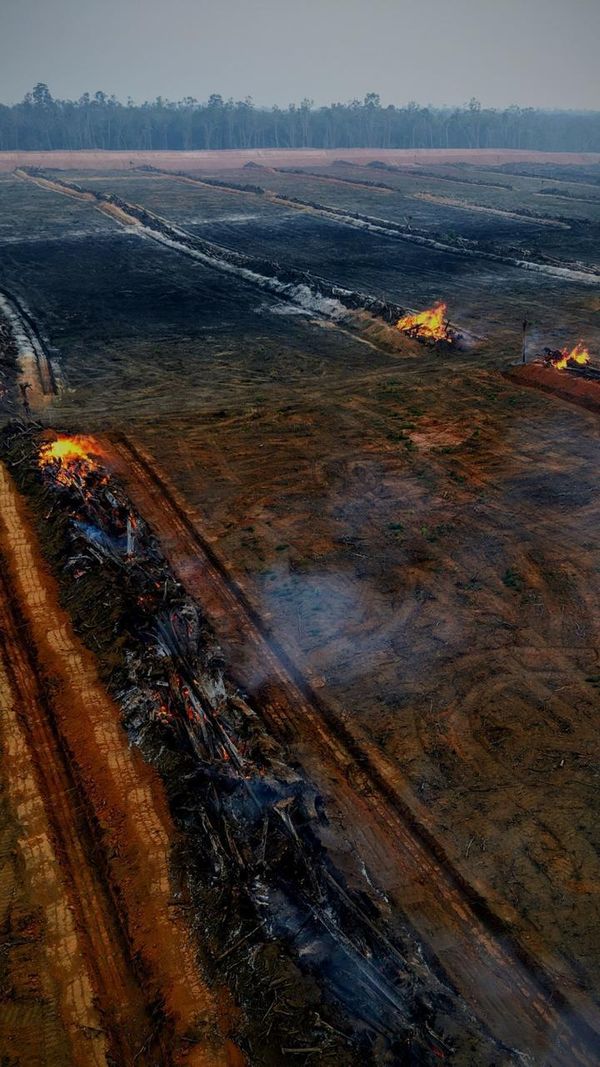
Thousands of students marched in Jakarta on October 28, Youth Pledge Day, demanding that months of forest fires be declared a national disaster. Estimates of the burned area range from about 202,000 hectares (government, January–July) to 1.9 million hectares (Greenpeace, January–September). A new WALHI report finds about half of this year's hotspots inside palm oil and forestry concessions, some linked to Prabowo's associates. One of them, PT Hutan Ketapang Industri in West Kalimantan, sits under a group recently bought by a POSCO International subsidiary.
Myanmar — (Long Read) Defying the Coup, Still in Hiding (Dunia, October 29)
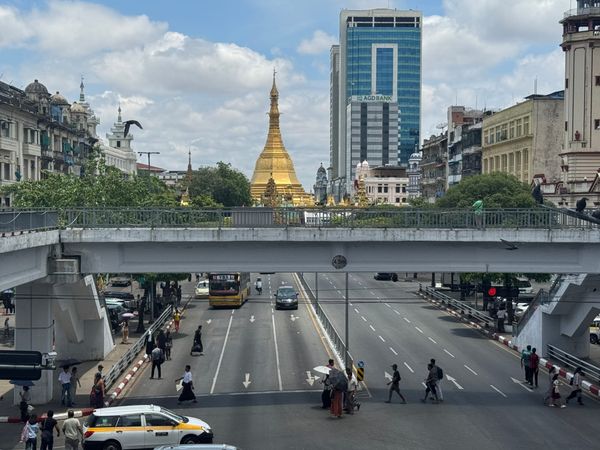
From Yangon: three women who joined the 2021 Spring Revolution describe snipers, torture in military custody, prison, and relatives abducted for conscription. They changed interview locations repeatedly to avoid CCTV and informers. Meanwhile, coup leader Min Aung Hlaing has traded his uniform for the presidency and is touring regional capitals. None of the women say they regret protesting. Read it alongside the Reuters jet fuel story above.
Before you go
Asia Undercovered is looking for a co-author. If you are an Asia-based journalist with five or more years of reporting experience and want to help surface local journalism, write to skidolma@gmail.com. Like me, it's a volunteer role.
If this issue was useful, please forward it to a friend. If someone forwarded it to you, you can subscribe at asiaundercovered.org.
Asia Undercovered brings you round-ups and analysis of the news, events, trends, and people shaping Asia — curated by journalist Seulki Lee, founder and editor-in-chief of the Asian investigative newsroom Dunia. If you found this round-up useful, consider donating to fuel the next one.