Asia Undercovered Round-up: 26 October 2026

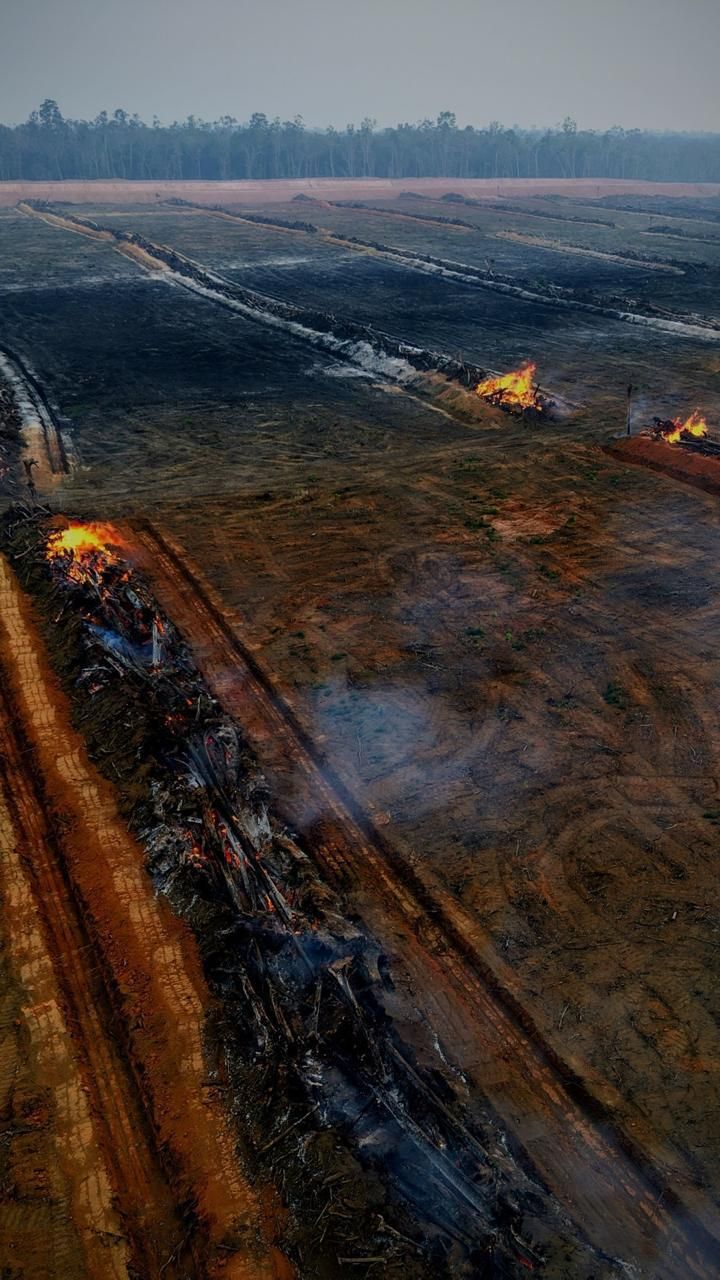
This week’s stories share a pattern. From Kalimantan’s peatlands to Delhi’s barricades to Sri Lanka’s north, those with power are protected, and the people living with the consequences are left to fend for themselves.
Indonesia’s Haze, and Who Owns the Fires
Between January and September, satellites picked up 30,927 fire hotspots across Indonesia. West and Central Kalimantan were the worst hit, with air quality in both provinces ranging from unhealthy to hazardous. A new report by the environmental group WALHI finds that nearly half of those hotspots sat inside palm oil and forestry concessions. Those concessions belong to 561 palm oil companies and 293 forestry firms.
WALHI traced the ownership of the 30 worst-burning companies. It identified the owners of 22, but the beneficial owners of the rest remain unknown. Nine of the top firms have parents or shareholders in Singapore, Malaysia, India or tax havens such as the British Virgin Islands and Samoa. Of the companies reported to the government, 93 are tied to Singaporean or Malaysian groups, led by Sinar Mas (26), Wilmar (21) and Sime Darby (9). Wilmar and First Resources have had “no burning” policies for over a decade, yet WALHI found no sign of corrective action as fires recur on their land.
The report also maps political ties. Some concessions are linked to a presidential special envoy, to a campaign adviser and to a former minister convicted of corruption. In Papua, the Merauke food and energy estate, a national strategic project, logged 807 hotspots. Most of them were in food estates run directly by the government.
One name has a Korean connection: PT Hutan Ketapang Industri, with 142 hotspots in Ketapang, West Kalimantan. Its former parent, Sampoerna Agro, was sold to a POSCO International subsidiary in November 2025. WALHI notes that 80 percent of Hutan Ketapang’s shares moved to a Sampoerna-linked Singapore entity right after that sale, so whether it remains within the POSCO group is unclear.
The haze has crossed borders. Malaysia closed schools, seeded clouds, declared an emergency in parts of Sarawak and called for an urgent ASEAN meeting, while insisting its own companies aren’t to blame. Singapore went further and sent preventive notices to ten Indonesian companies under its Transboundary Haze Pollution Act. Timor-Leste shut schools nationwide for three days. Jakarta first refused to declare a national disaster, then reversed course and accepted foreign help. The crisis is now on the agenda for ASEAN foreign ministers in November.
Tempo’s editorial (in Indonesian) lays the blame at home. The Prabowo Subianto administration dissolved its forest-fire task force in October 2025 and squeezed agency budgets to fund Prabowo’s flagship programs. Local governments hand out overlapping permits and rarely enforce their terms. And the Job Creation Law treats criminal penalties for companies as a last resort. Residents in six provinces of Indonesia, the magazine writes, have been left to fight the fires alone, with volunteers including women’s groups battling the embers and communities setting up their own oxygen rooms. As Tempo puts it, until the chain protecting the companies is broken, the fires will keep coming back.
India Locks Down Its Own Capital
On October 10, the youth-led Cockroach Janata Party called a protest in Delhi demanding the resignation of Chief Election Commissioner Gyanesh Kumar. Kumar has overseen the voter-roll revision that struck off some 130 million names. The government’s answer was some 23,000 security personnel, an internet blackout across central Delhi, 57 closed metro stations and more than 7,000 detentions by sunset. Those detained included the movement’s founder, Abhijit Dipke, who was taken off his plane on landing.
A day earlier, the Supreme Court had asked whether the restrictions amounted to using a “hammer to kill a fly.” As Himal Southasian reports, protesters now openly compare the crackdown to Indira Gandhi’s Emergency. Two days later the protest, Delhi Police de-notified Jantar Mantar as a protest site.
In Odisha, the same tools are being used to reopen a fight India’s top court was thought to have settled. In 2013, Dongria Kondh village councils rejected Vedanta’s plan to mine bauxite on Niyamgiri, a hill they hold sacred. On September 26, Vedanta chairman Anil Agarwal met the chief minister and said the hill would be reopened for mining. That was barely two weeks after police detained Lado Sikaka, leader of the Niyamgiri Surakhya Samiti, in a 2012 case invoking the UAPA anti-terror law, Frontline reports.
Meanwhile, Bellingcat has traced at least USD 24.4 million in anonymous donor-advised fund grants from 2020 to 2024. The money went to two Houston-based charities, Ekal USA and Sewa International, which have past and present ties to the Hindu nationalist RSS or groups associated with it. Bellingcat found no evidence the money reached the RSS itself. Experts say these funds face far lighter oversight than other kinds of giving.
Scam Hubs Are Rewriting Diplomacy
Al Jazeera’s 101 East went undercover at Cambodia’s Long Bay development in Koh Kong. In Exposing an Alleged Crime Kingpin’s Cambodian Empire, developer Deng Pibing is secretly filmed discussing payments to police units. Cambodia’s anti-scam commission has since told the Phnom Penh Post that Deng is under investigation and is the subject of an Interpol Red Notice. He left the country in May this year.
Scam centers are also behind Washington’s quiet thaw with Myanmar’s generals. US officials held a second round of secret talks in Tokyo with the military-backed government, Reuters reports. The talks focused on scam hubs targeting Americans, with an eye on Myanmar’s heavy rare earths. Japan is also tentatively re-engaging.
Rights Under Pressure
In Bogor, Indonesia, a group calling itself “Boti Hunter” has carried out at least 10 attacks on trans women since March. Activists say a 2025 presidential regulation naming the “spread of LGBTQ culture” as a non-military threat emboldened the group. Project Multatuli (in Indonesian) spent time with four women who have not dared to work for the past month. Their dreams are modest: a soto stall, a chicken farm, a vegetable stand.
Seventeen years after Sri Lanka’s civil war ended, the country’s own Human Rights Commission says militarization still defines the Tamil-majority north and east. It points to occupied land and to soldiers even overseeing preschool teachers, The Hindu reports.
In Cambodia, a quarter of NGOs say they can’t survive past 2027, squeezed by political pressure and collapsing aid. In The Diplomat, Louise Coventry argues that the sector’s own rescue roadmap won’t work.
At the ICC, Rodrigo Duterte’s defense claimed the prosecution’s drug-war death toll came from an “AI-generated” spreadsheet padded with unrelated killings. Prosecutors say analysts reviewed the records by hand to reach roughly 3,400 deaths (via @TristanNodalo).
After the Flood, the Feed
Two months after the flood we covered in our last issue, researcher Nobel Rimal learned through a viral reel that his grandfather’s welding workshop by the Trisuli bridge was gone. In Nepali Times, he writes about doomscrolling, AI-generated relief posters of an imaginary Nepal and politicians chasing the hero shot. He asks that we give recovery the attention we give collapse. His grandfather, meanwhile, is already planning small shops where displaced businesses can reopen.
Asia Undercovered brings you round-ups and analysis of the news, events, trends and people shaping Asia — curated by journalist Seulki Lee, founder and editor-in-chief of the Asian investigative journalism network Dunia. If you found this round-up useful, consider donating to fuel the next one.
Thank you for your support!